
What's Your Nature?
Become a Nature Up North explorer to share your encounters with wild things and wild places in New York's North Country. Post your wildlife sightings, landscape shots, photos from your outings, and even your organization's events!
Just Our Nature Posts
Name-Calling
By Paul J. Hetzler on
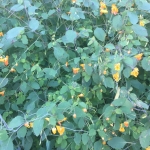
Blog: Just Our NatureEncouraging people to make friends with wild plants can be a challenge. Sometimes there are genuine concerns. Nettles, as an example, make an early-spring cooked green par excellence, even though its fresh leaves and stems have stinging hairs that can cause an uncomfortable, if temporary, rash if care is not taken when harvesting it.
Other times, it is a matter of perception. Critical to the…
Weather or Not
By Paul J. Hetzler on
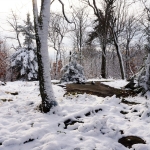
Blog: Just Our NatureWeather modeling has become quite a big deal in recent years, with meteorologists falling all over themselves to report what the latest models say. It sounds like a fun job, and I am trying to find out how to apply for a position. No doubt I could model categories like “large stationary front” or “high pressure system” pretty well. If it involves appearing in a swimsuit, though, forget it.
I love…
2018 Nature Up North Calendars
By Emlyn Crocker on
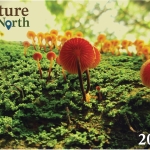
Blog: Just Our NatureWe are pleased to announce that 2018 Nature Up North calendars are on sale now through January! The printed calendar features some of our favorite photos shared by community members as Encounters on natureupnorth.org in the past year. They also feature Nature Notes highlighting seasonal wildlife behavior to look for each month.
Proceeds from our…

Caterpillar Soup
By Paul J. Hetzler on
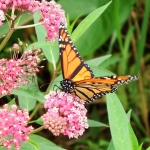
Blog: Just Our NatureWhen it comes to personal growth, the Wicked Witch of the West had the right idea. Quite possibly she got it from monarch butterflies, which must exist in Oz, since they are found worldwide except for polar regions. Many times, a rearrangement of the self-image we have come to know is needed to achieve our fullest potential. In my experience this is always hard, and seldom is it voluntary.
We…
Seeing Red
By Paul J. Hetzler on
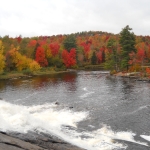
Blog: Just Our NatureWe need to figure out a way to have Amazon deliver the weather in the future. I don’t believe Mother Nature intended to give us a record-setting wet summer; I just think all the good weather probably got misplaced on a loading dock in Topeka, or something like that. The spate of mild sunny weather we’ve been having over the past couple of weeks, while very enjoyable, was clearly meant to be…
Northern Oysters
By Paul J. Hetzler on
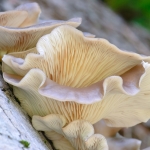
Blog: Just Our NatureCarnivorous oysters are lurking about in the North Country, and residents who venture into the woods are advised to carry butter and a skillet at all times. Oyster mushrooms, Pleurotus ostreatus, native wood-decaying fungi often found on dead and dying hardwoods, are delectable when sautéed in butter. Maybe hikers should carry a few cloves of garlic and a press as well. It’s good to be prepared.…
An Introduction to Earth’s History as told by the North Country Landscape
By Maya Williams on
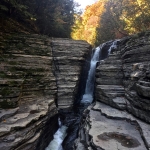
Blog: Just Our NatureHave you ever thought about what the earth was like millions of years ago? It’s hard to imagine the world before we were born, let alone before the human species existed. But if the history of our planet was represented by a single 24 hour day, the presence of modern humans would only be equivalent to less than 4 seconds. What do you think Earth will look like in another million years? The more…


Nature Up North Calendar Photo Contest
By Emlyn Crocker on
Blog: Just Our Nature
**contest closed -- winning submissions will be announced by mid October, 2017**
Calling all North Country nature photographers!
Got your camera at the ready? Nature Up North is once again hosting our annual calendar contest for nature photos that will be featured in our 2018 wall calendar. At Nature Up North we hope to inspire exploration and appreciation of the…

When the Sky is On Fire
By Maya Williams on
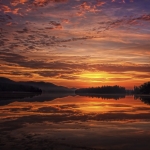
Blog: Just Our NatureThe sun sinks low on the horizon and the sky comes to life in a fiery burst of color. You grab your camera and run outside, in awe of the saturated sky above you. But your dog is thoroughly unimpressed, only interested in the possibility of playtime. It has no idea the sky is on fire. Every animal has a different perception of light and color meaning everything we see is through our own human…


It's Better When It's Wetter: Four Reasons to Get Out in the Rain
By Molly McMasters on
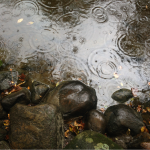
Blog: Just Our NatureIt may feel like these dreary days of rain will never end, but don’t fret! Rain brings many hidden gems out of the natural world that we usually don’t see during dryer weather. So, throw on your rain boots, grab an umbrella, and step out to explore our soggy wonderland!
1) Cast a New Light on Canoeing
Typically, canoeing is perceived as a sunny day activity. But sometimes, a paddle in the rain…


