
What's Your Nature?
Become a Nature Up North explorer to share your encounters with wild things and wild places in New York's North Country. Post your wildlife sightings, landscape shots, photos from your outings, and even your organization's events!
Resources from Nature Up North
Place-based education is the process of using the local community and environment as a starting point to teach concepts in language arts, mathematics, social studies, science, and other subjects across the curriculum… Community vitality and environmental quality are improved through the active engagement of local citizens, community organizations, and environmental resources in the life of the school.
-David Sobel, Place-Based Education
Nature Up North works to be a resource for Northern New York teachers who wish to incorporate more place- and nature-based learning into their curriculum. One of our goals is to engage with K-12 teachers to promote hands-on outdoor lessons that improve learning outcomes, particularly in STEM subjects, while at the same time helping students connect with the natural world.
We are fortunate in the North Country to be surrounded by forests, wetlands, rivers, and farms that serve as excellent resources for bringing the classroom outdoors. Here, we offer lesson plans, activity guides, and other resources that encourage hands-on learning about the local environment.
Some of these resources, such as the “Interview with a Scientist” and the North Country nutrient cycle diagrams, offer place-based versions of lessons in the Common Core Curriculum. The Monitor My Maple Teacher Guide offers ways to engage students in hands-on citizen science projects, with examples for how to integrate project elements into science and math learning at various grade levels.
This page is new and expanding. Please check back soon for updates!
This worksheet walks students through one of 5 different citizen science projects, listed below. Assign students one of the projects listed to research, and instruct them to fill out the worksheet as they learn about the project. Students may work in groups or alone. This lesson is meant to be adaptable; different projects may be swapped in depending on your goals.
- Monitor My Maple (Nature Up North): natureupnorth.org/monitor-my-maple-project
- Water Monitoring (Nature Up North): natureupnorth.org/watermonitoring
- iNaturalist, California Academy of Sciences/National Geographic: inaturalist.org/
- eBird (Cornell Lab of Ornithology): ebird.org/home
- Nature’s Notebook (National Phenology Network): usanpn.org/natures_notebook
Grade level:
Resource Type:
Subject(s):
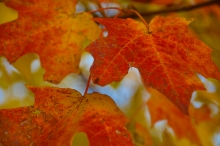
This data sheet provides a paper replica of the online Fall Monitor My Maple webform. Download and print to enable your students to record maple data in the field.
Grade level:
Resource Type:
Subject(s):
This lesson plan and worksheet walks students through making observations about maple trees, developing a hypothesis, and analyzing their results by graphing.
Grade level:
Resource Type:
Subject(s):
This is a word-document version of the lab exercise Eniko Gilbert (Colton Pierrepont Central School) developed to extend on the Nature Up North Monitor My Maple citizen science project. We are posting it here with her permission. Feel free to contact her (gilberen@cpcs.us) with questions.
Grade level:
Resource Type:
Subject(s):
This word document presents a series of questions that ask the user to find and use different aspects of the Nature Up North website in order to become familiar with the website's features.