The Tale of the Turkey Vulture
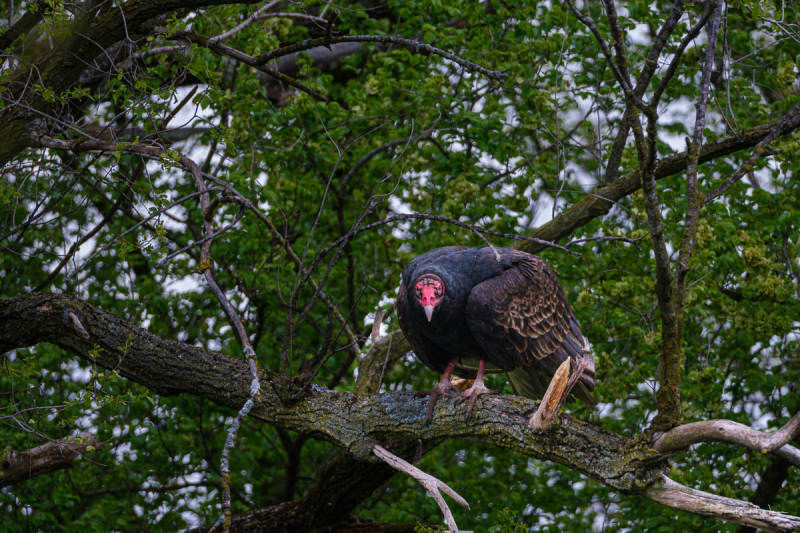
I remember one time while in the North Country, I witnessed a group of turkey vultures gathered in a field off the side of an unknown road in Canton. It was quite a sight, seeing a bunch of those large, magnificent birds all gathered in one spot around what was presumably some sort of carcass. I also recall, both in the North Country and at my home in Pennsylvania, spotting many turkey vultures in the air spiraling around a specific location and wondering what had died, and how it passed. Turkey vultures are one of my favorite birds to see in the wild – it is easy to spot their majestic V-shaped wings soaring slowly overhead in the open countryside, and I always find it fun to challenge myself to spot their bright pink heads.
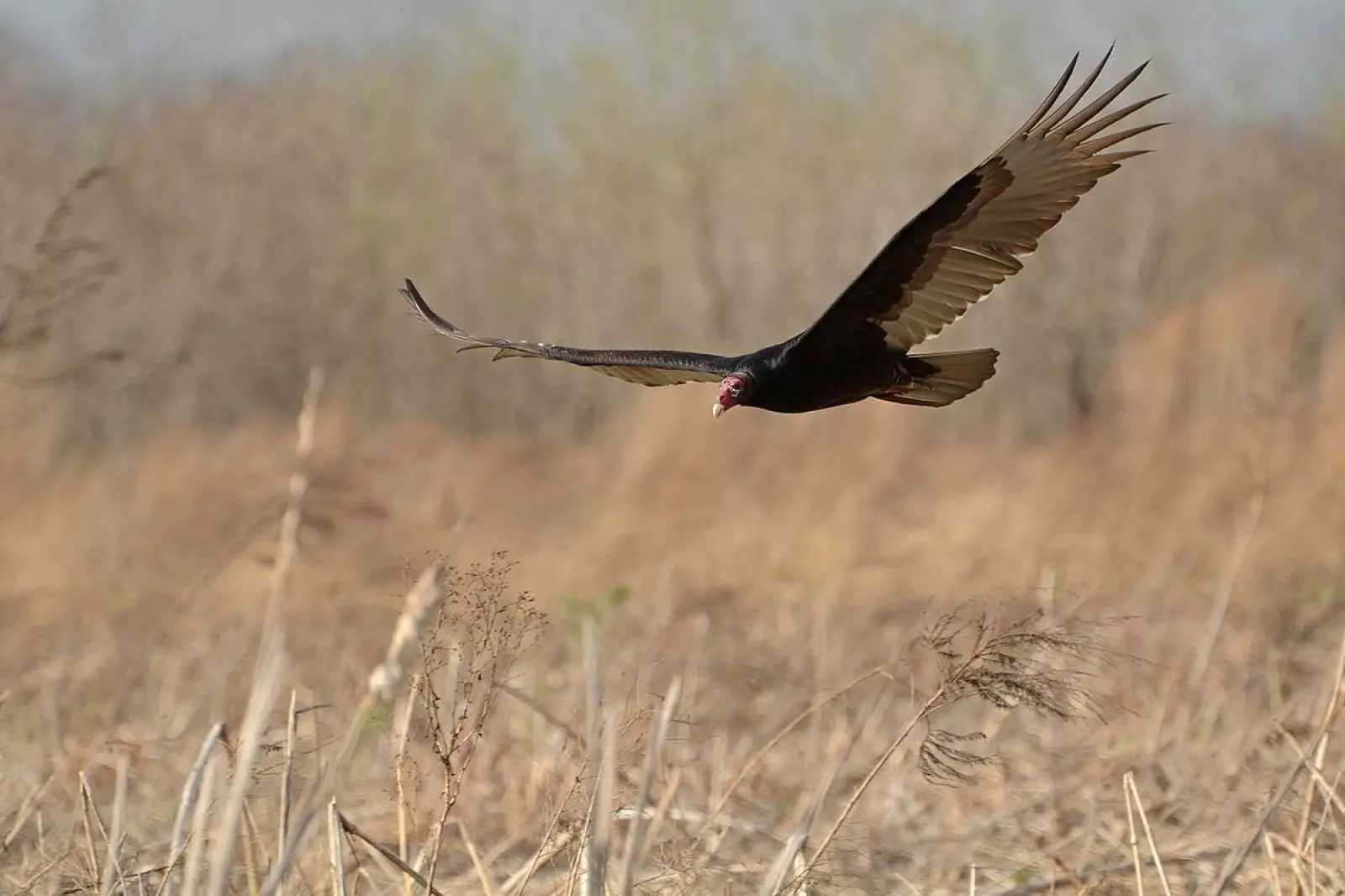
Turkey vultures are the most common vulture in eastern North America. As vultures, they are considered birds of prey, but while they look very similar to vultures in Africa and Eurasia, they are not closely related and are an example of convergent evolution, or when two unrelated groups of animals evolve to look a lot like each other. Vultures are scavengers – their beaks and claws may look scary, but they aren't as strong as other birds of prey, so they only feed on dead animals after another predator has opened up the body. They soar on thermals, pockets of rising warm wind, and use their incredibly strong sense of smell to locate carrion, another word for dead meat. Once they find an open carcass, they are well adapted to feed on the messy rotting meat; their bright pink bald heads, while not the prettiest looking, allow them to stick their head in carrion while keeping themselves clean. They also have incredibly acidic stomach acid that they can use to digest all manner of rotting meat and diseases without a problem.
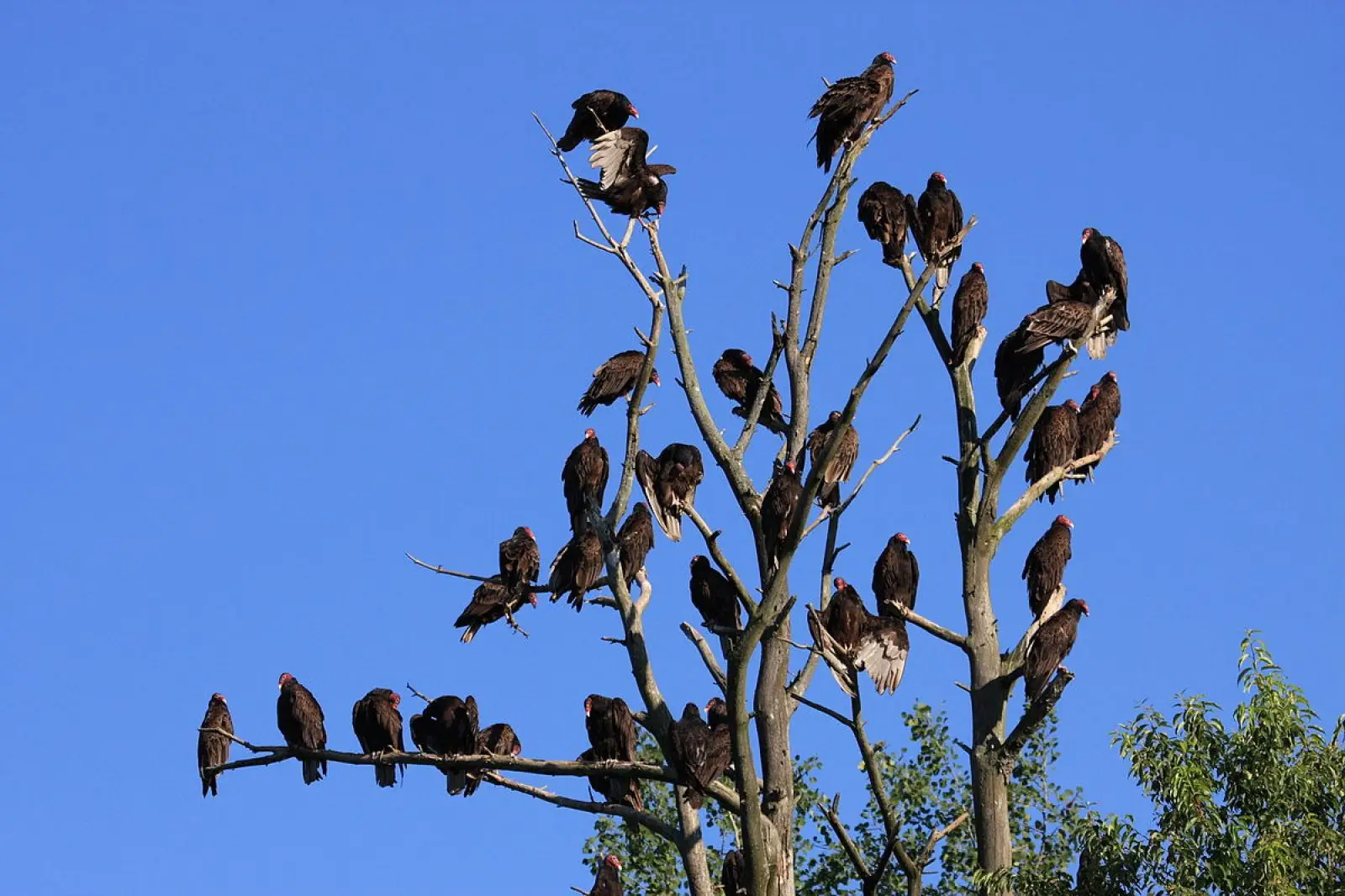
Because of this complex natural relationship with the dead and dying, vultures have long been associated with death in human cultures. In fact, a group of feeding vultures is known as a “wake,” a word that is also used to refer to a ceremony in which people stand watch over a recently deceased person. They are widely regarded as symbols of death, rebirth, and due to their ability to clean up rotting carcasses, symbols of purification and a ward against disease. In Haudenosaunee cultures, vultures are regarded as powerful birds; in one myth, Vulture uses his powerful flight capabilities to go on an arduous journey to the Sun to retrieve feathers for the birds, burning off the feathers on his head in the process. Once there, he tries on many coats of feathers and is dissatisfied with them until he is only left with a poor fitting dull brown coat of feathers.
Despite their fascinating cultural role, today most people have negative opinions of turkey vultures. I find many people I talk to are creeped out by their wrinkly bald heads and un-decorative black plumage. Additionally, a lot of people are grossed out by the vulture's tendency to defecate on their legs to cool themselves, as well as their ability to weaponize their stomach acid as vomit in self-defense. Most importantly, they are vilified by people because of their “gross” and “unhygienic” scavenger lifestyle, as people believe them to be messy, carrying and spreading diseases from the corpses they feed on. In truth, turkey vultures pose no threat to humans; actually the opposite. While turkey vultures have stable populations, they are routinely threatened by lead poisoning (after scavenging on carcasses that had been shot) and agricultural contamination from pesticides and other chemicals that travel through the food chain and ultimately end up inside the vultures.
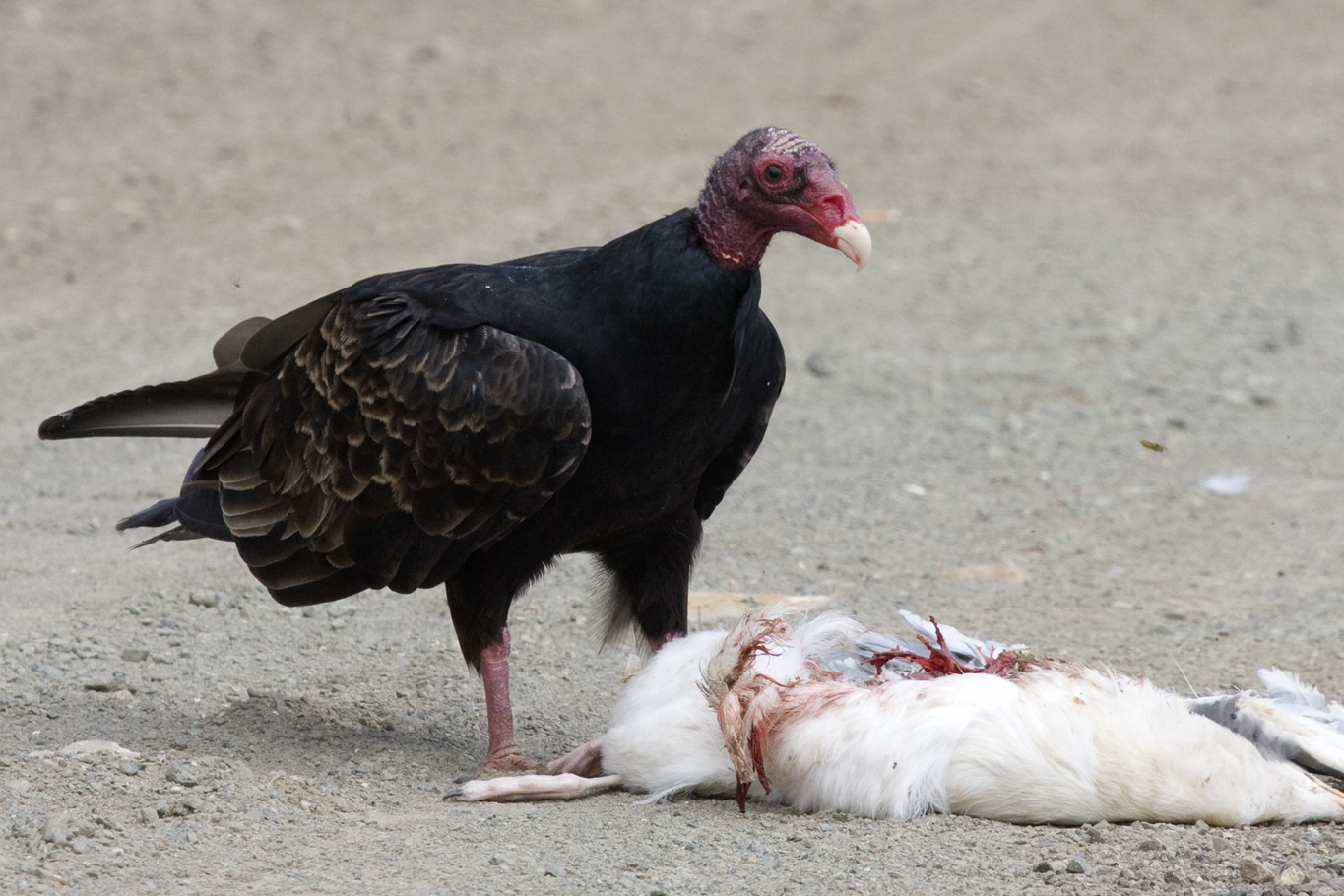
Despite their less-than-ideal reputation, I believe turkey vultures are wonderful creatures that deserve much more love and respect from people than they currently receive. For starters, vultures do not spread diseases; by digesting the diseases that accumulate on carrion, they actually prevent rotting meat from building up in North Country ecosystems, which prevents the spread of diseases and keeps our natural spaces cleaner. They play an important ecological role as scavengers, breaking down carrion to a state where it can be more efficiently disposed of by decomposers like bacteria, beetles, and fungi, letting important nutrients return to the earth for plant use. Lastly, turkey vultures are surprisingly intelligent and playful. They have been observed solving puzzles and display problem-solving skills, and are often provided with toys to keep their playfulness entertained in captivity.
All in all, turkey vultures are cool North Country residents that don't deserve their bad reputation. After finishing this blog, I hope that the next time you see a wake of vultures overhead you remember what an important role those birds play in our local ecosystem.