

The Science of Apples
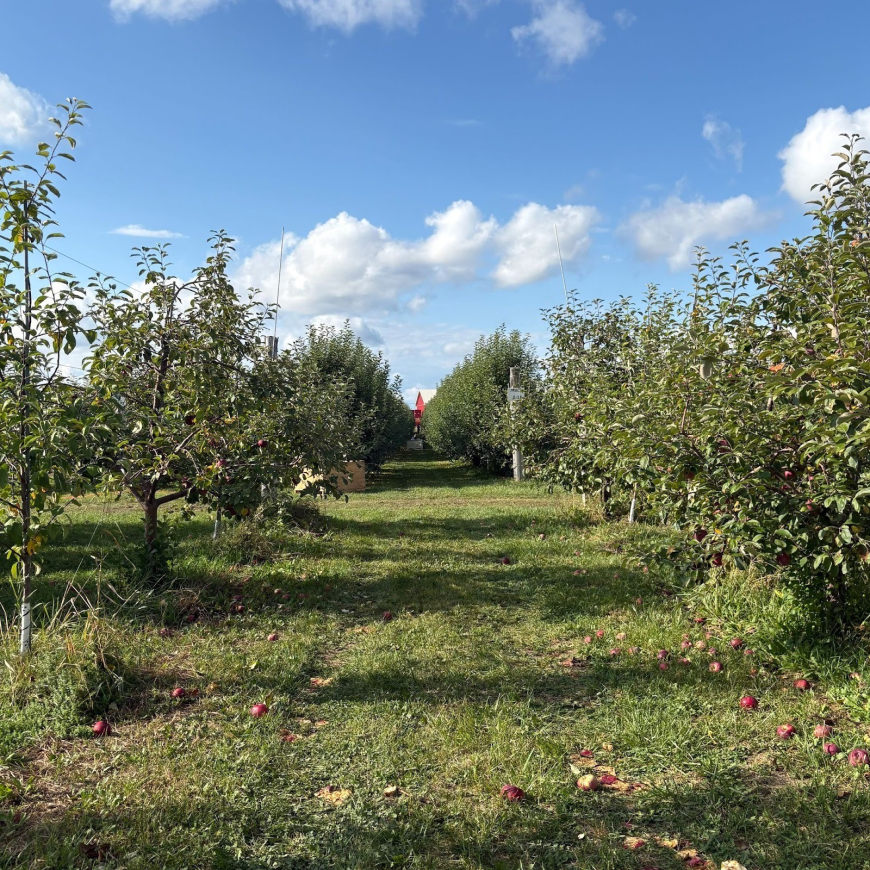
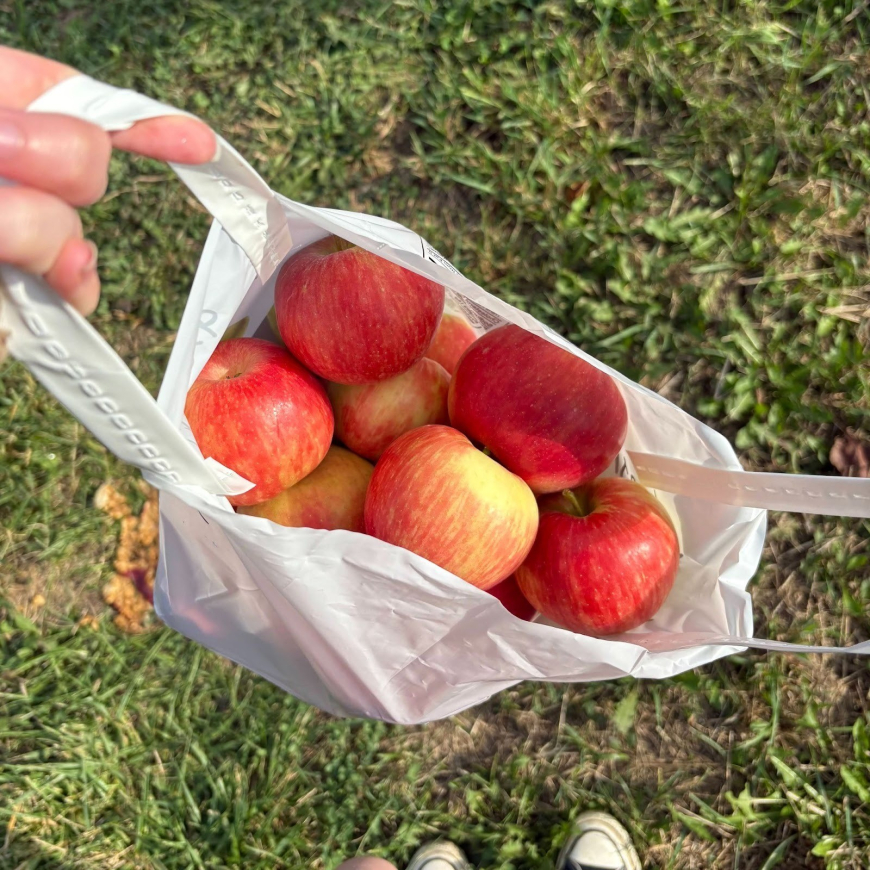
Fall in the North Country doesn’t feel complete without a trip to the orchard and the taste of an apple freshly picked off the tree. Now that the season of apple picking is over, it's a good time to reflect on the months of growth and hard work that have made this year’s season possible. As we know, every fall farms across the country rush to pick their apples at the perfect time. The time when the apples just ripen in the cool air and before the first frost hits. Most of the time it’s out of the farmer's control how successful a season will be, as they depend on a variety of conditions.
Interestingly, the conditions that determine a season’s success are also the reason apples ended up in North America in the first place. Apples aren’t originally native to the North Country or North America for that matter. Their roots trace back to the mountains of Kazakhstan, where Malus sieversii, the wild ancestor of modern apples, still grows today. From there, apples were spread and grown across Europe and was eventually brought to the Americas by colonists in the 1600s . Early settlers introduced apple seeds to different regions and found that New York’s temperate climate and soils were very suited for apple trees to thrive.
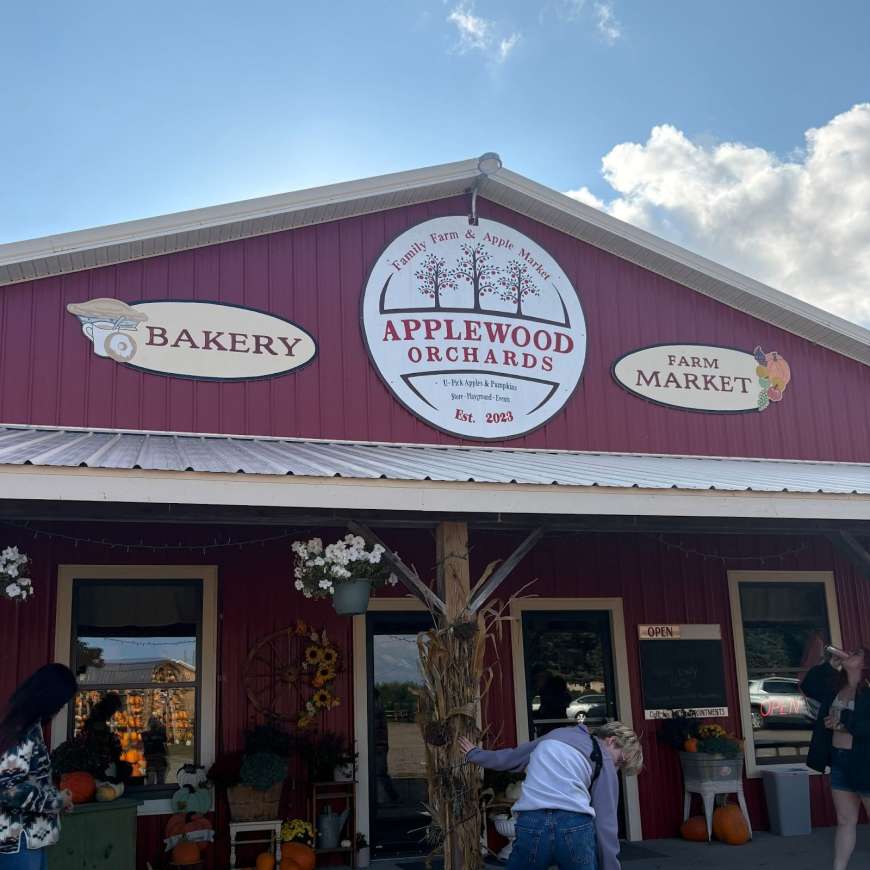
Today, New York ranks the second-largest apple-producing state in the country, averaging 29.5 million bushels a year across about 55,000 acres of orchards (USDA 2024). These acres are spread across six major regions in New York State, where they each thrive in unique ways. In the North Country, spots like “Applewood Orchards” in Rensselaer Falls keep that number up and the tradition of local apple picking alive. On top of that, apples are an essential part of New York’s economy, generating hundreds of millions of dollars annually (USDA 2024). That economic value is deeply tied to the culture of apples. Come fall, families, friends, and students visit their local orchards for U-pick weekends, school trips, and to enjoy a favorite fall tradition. The orchards become a gathering place for the community, selling sweet treats, fresh cider, and experiences that allow people to connect with nature and the food they eat. In the end, the season of apple harvesting relies heavily on that community aspect along with the climate that makes it all possible year after year.
A Dry Summer
That being said, the harvest depends almost entirely on the weather to grow the apples. Not just the weather during actual harvest times, but also throughout the whole year. A mild spring can mean strong blossoms and a good pollination season, while too much rain or a late frost can ruin a crop before it even starts. This year, the main issue before harvest time was the lack of summer rain. According to Dr. Alexander K. Stewart, Associate Professor of Geology at St. Lawrence University, this summer was the driest on record for St. Lawrence County in the last hundred years. Normally, the area receives around 10.5 inches of rainfall between June and August, but this year only 2.05 inches fell. This is less than half of the previous record low in the last 100 years, set at 5 inches in 1944! In the graph below, produced by Dr. Steward, you'll see two things graphed with a line of best fit for each. The red line is measuring the total number of days that summer with precipitation, and the blue line is measuring the total precipitation amount.
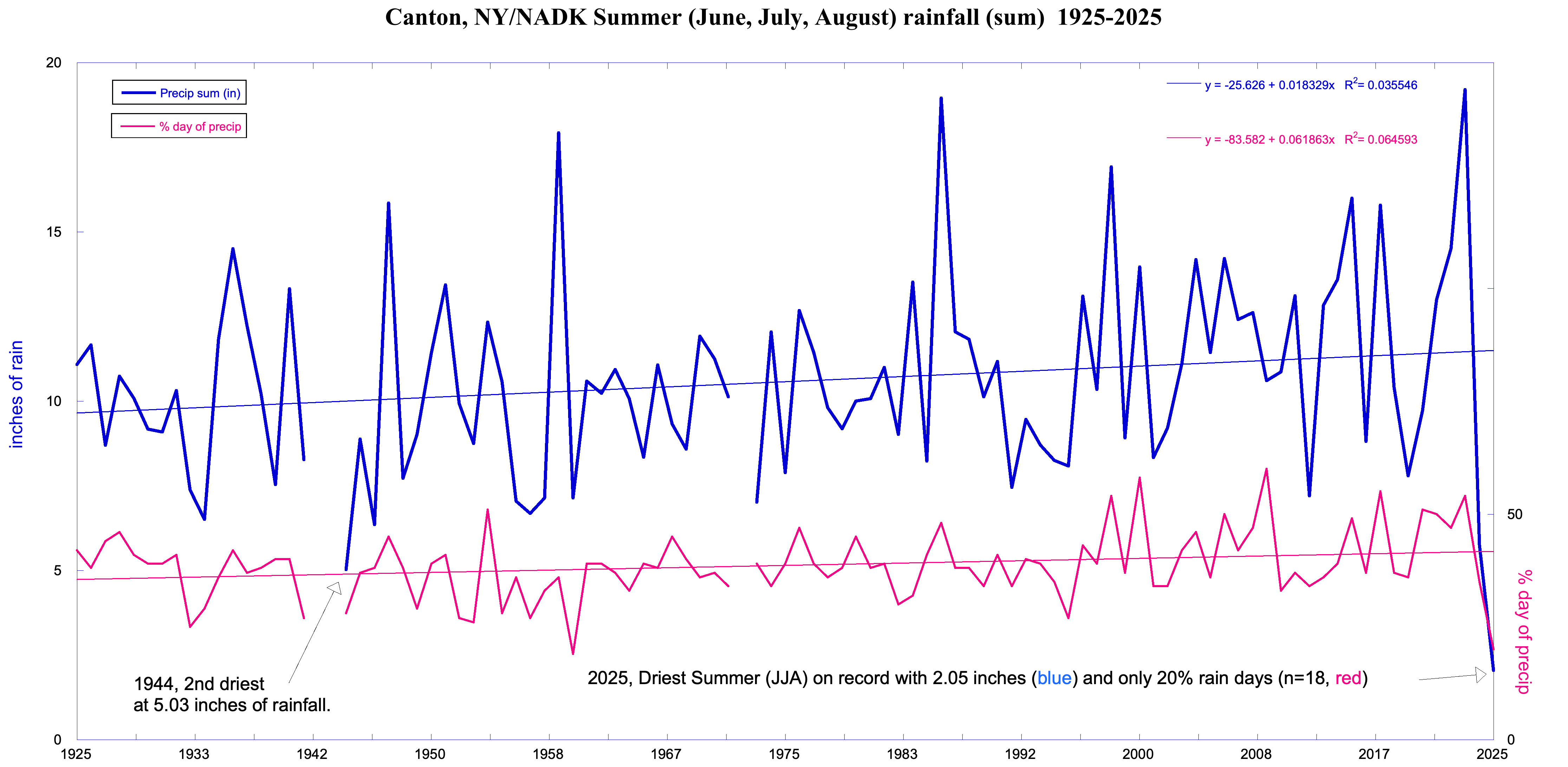
Without enough rainfall, orchard farmers may face earlier harvests, smaller yields, or stress in younger trees. Researchers at Cornell University are observing similar patterns across the state. Jason Londo, Associate Professor of Horticulture, explains that “extreme rainfall and drought disrupt the balance of water and heat that apples rely on during the growing season” (Rodger, Cornell CALS, 2025). These disruptions can influence not only long-term tree health but also “subtle differences in fruit finish that affect how apples look, taste, and sell.”
Climate Effects Locally
To understand how local growers managed through the dry summer, I spoke with one of the owners of Applewood Orchards in Rensselaer Falls, a local favorite. They spoke about how the summer drought did impact their crop seeing some smaller apples and fewer apples overall on some trees. Also, since the dry weather extended into early fall, it delayed the apple’s ripening by three weeks for some varieties.
The Macintosh apples, typically one of Applewood’s most popular varieties, was hit the hardest. They noted that “they stayed harder than usual, and the taste was just a little different.” As the macs are typically a softer variety. The other varieties eventually ripened well, just overall came in smaller than average. Still, despite the delays and smaller fruit, the orchard considered the overall yield good for such a dry year.
As the season shifted into fall, late rain and cold weather arrived too late to make much difference, since most apples were already picked. The manager said they’re now hoping for “more rain before the ground freezes,” giving the trees a chance to absorb moisture before winter dormancy. As for winter prep, the trees naturally go dormant, so the main tasks involve removing any dead trees and preparing the ground for spring planting. “Our trees are pretty resilient,” they said. “They can handle the cold.”
Community Effects Locally
Interestingly, while the drought hurt apple crop production, it also brought an unexpected silver lining for Applewood Orchards. “We had a lot more sunny days,” they said, which meant more visitors for the orchard’s agritourism side. More families came to enjoy the playground, corn maze, wagon rides, and pumpkin patch. In this case, the lack of rain actually helped the other side of the business.
And for Applewood Orchards, the North Country community is a major part of what they are about. They shared that “We wouldn’t be here without local support,” as the orchard has become a family destination and a favorite stop for school field trips in the fall. They also supply their apples to local schools and colleges, helping maintain the connection between local farming and the community. And even as this year was challenging distributing smaller and fewer apples, those local partnerships remain strong.
Looking Ahead
Like Applewood Orchards, many orchards across the North Country rely on a careful balance between climate and community support to have a successful season. Apples need sufficient rainfall, sunlight, and local care throughout the growing season to reach full size and flavor. These shifts in the weather are proven to affect both the yield and quality of the apples. Although this is not a dramatic cause for concern now, it may become one over time as climate patterns continue to change and become more noticeable and impactful.
In this sense, visiting local orchards is more than a fun seasonal outing. It’s a way to appreciate our local nature, learn about how apples are grown, and learn about our local food systems. The apples that were just harvested this fall season are now being pressed into cider, baked into pies for the holidays, and are being stored to be sold throughout the year, extending the season’s impact long after the last pickers leave the trees. This year’s harvest shows just how much the North Country depends on its land, the people who care for it and those who support it, making it a local staple for seasons to come.